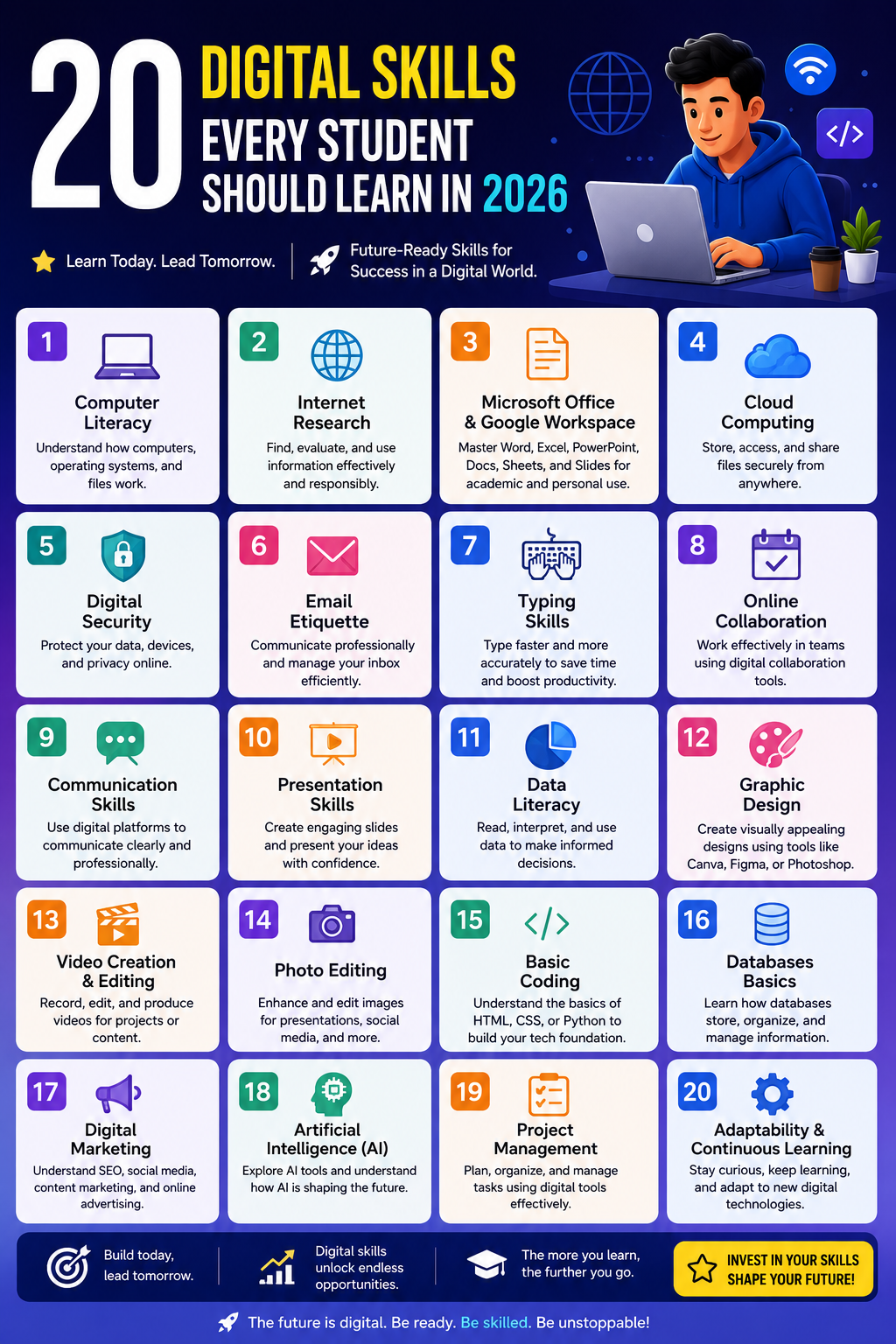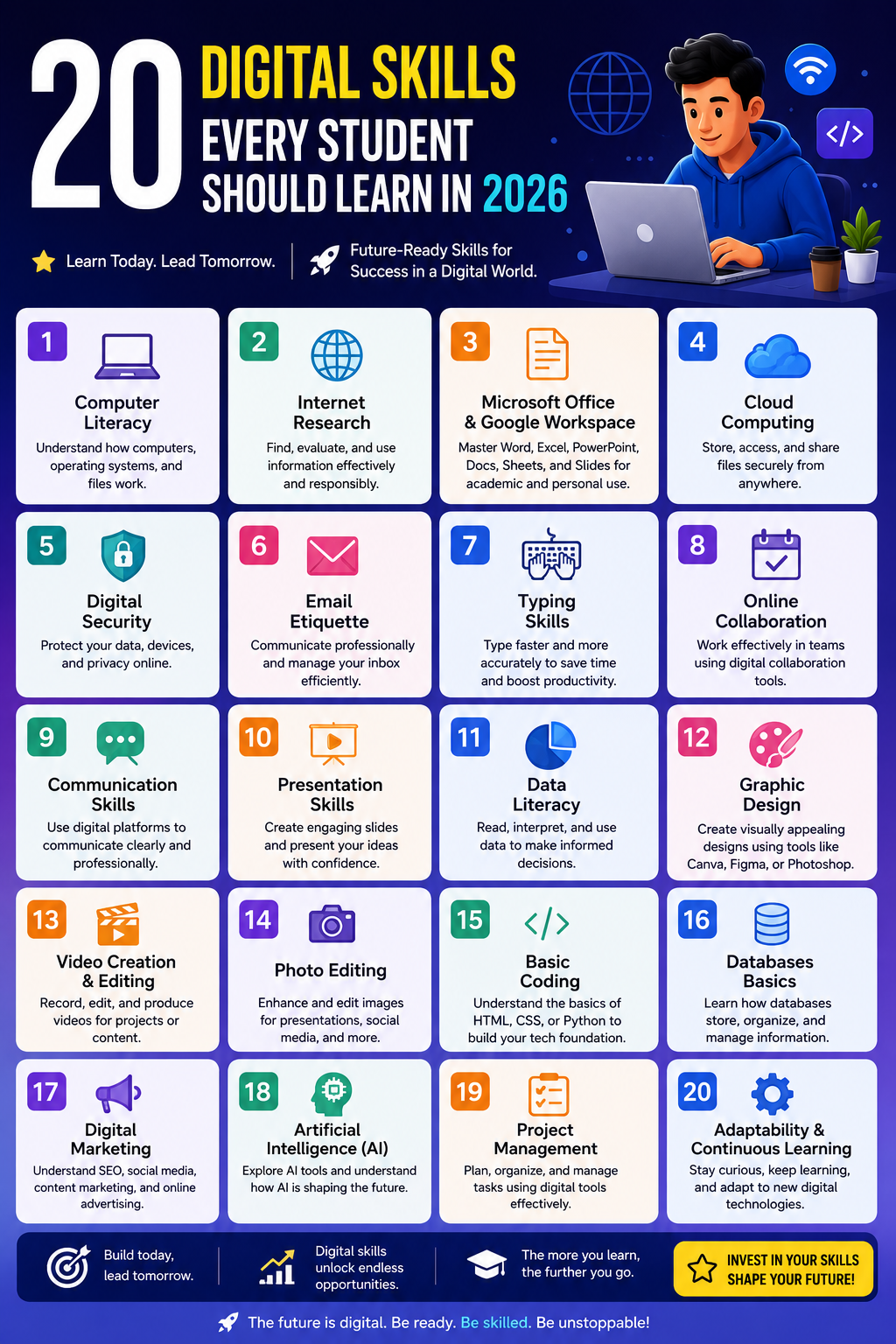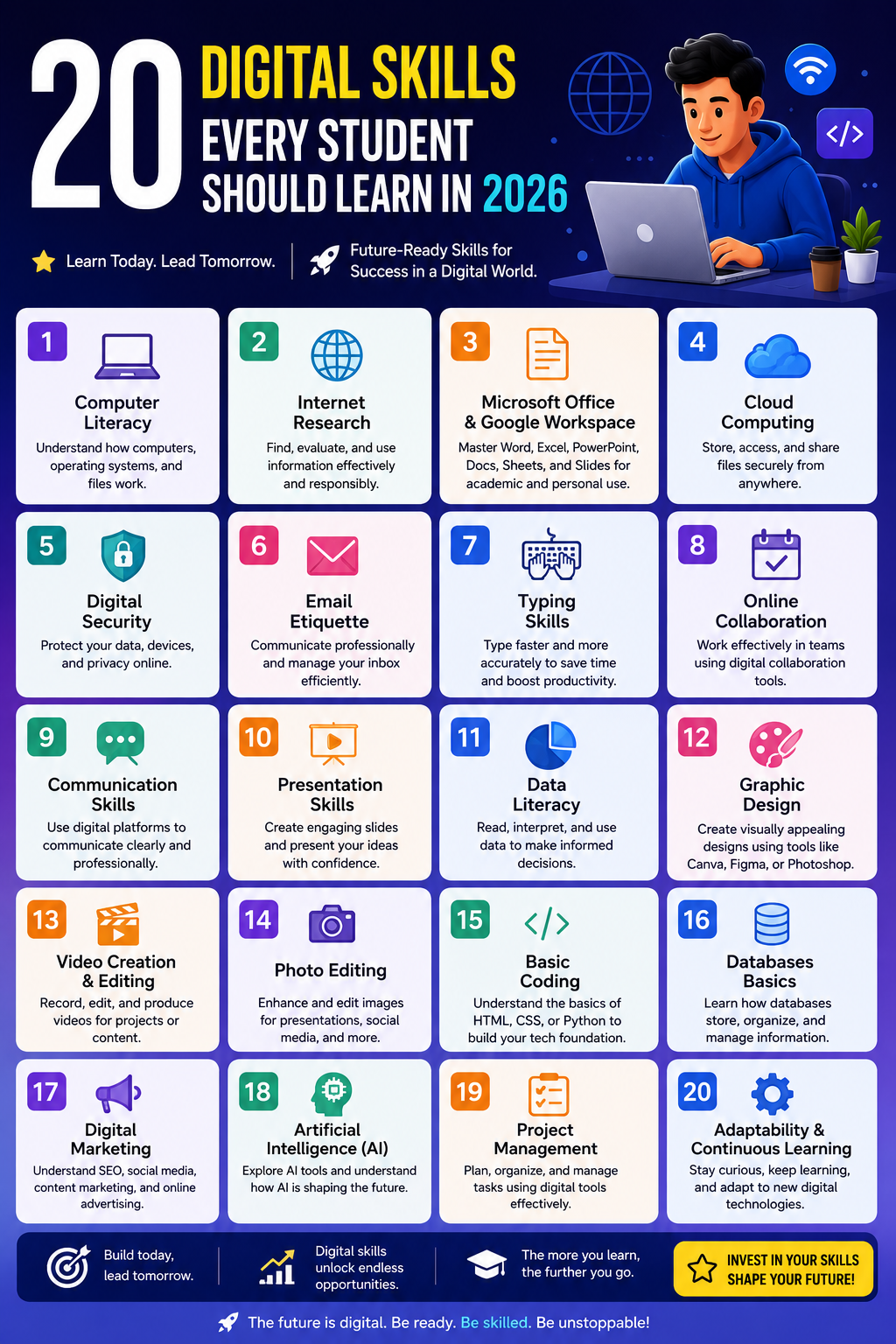
The modern student's survival guide: From AI literacy to cybersecurity, here's your roadmap to digital fluency in an AI-shaped world.
Introduction: The New Literacy
The question is no longer: "What do you study?" It is becoming: "What can you create, solve, and improve using digital skills?" The gap between students who understand technology and those who don't is widening by the semester. But here's the good news: you don't need to be a computer science major to be digitally capable. The skills that actually matter in 2026 are more accessible than ever, and most of them can be picked up with a laptop and a bit of curiosity.
Traditional definitions of digital literacy focused largely on operational skills—using devices, navigating software, or finding information online. While these skills remain important, they no longer capture what students must do in today's digital environments. Information may be incomplete, biased, or fabricated. Digital spaces blur boundaries and shape what students see, how they interact, and whose voices are amplified.
This is why the ETS (Educational Testing Service) research report reframes digital literacy as a multidimensional capability. It is no longer a narrow technical skill; it is a core competency for learning, citizenship, and future readiness.
According to the NIIT India Skills Gap Report 2026—a nationwide study conducted with YouGov based on insights from 3,500 respondents—digital, data, and cybersecurity skills consistently rank among the top three most critical capabilities for the next 3-5 years across all cohorts surveyed: students, employees, recruiters, CXOs, and academia.
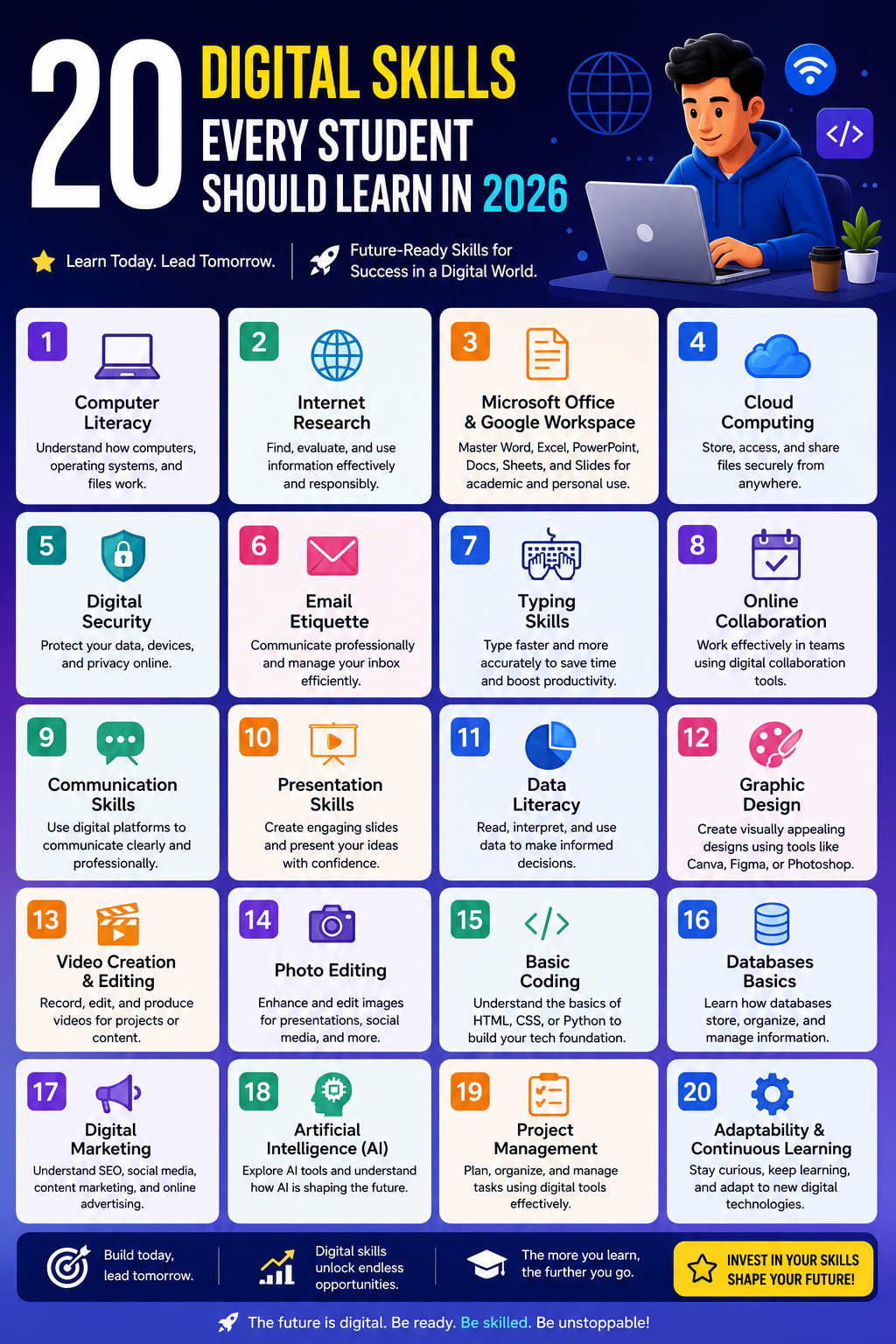
Below is a comprehensive list of 20 digital skills that will define student success in 2026 and beyond—from foundational basics to advanced capabilities that will make you stand out in the job market.
Part 1: The Digital Foundation (Skills 1-5)
1. Basic Computer and Device Literacy
Before diving into advanced technology, every learner should build a strong foundation. This includes using a computer, laptop, or tablet; typing and navigating a keyboard; using a mouse or touchpad; opening, saving, and organizing files; and connecting to Wi-Fi and browsing the internet. These skills act as the gateway to everything else in the digital world.
There's a persistent assumption that younger people are naturally tech-savvy because they grew up with smartphones. That's not the same thing as being able to use a computer well. Basic computer skills for students—touch typing at a decent speed, navigating file systems, formatting a document properly, understanding how browsers and search engines actually work—remain genuinely foundational.
Plenty of students get to university without ever learning keyboard shortcuts, how to write an effective search query, or the difference between saving a file locally and to the cloud. These gaps slow everything down.
2. Cloud Tools and Collaboration Platforms
If you're still saving everything to a single device and emailing attachments back and forth, it's time for an upgrade. Cloud platforms like Google Workspace and Microsoft 365 have become the standard operating environment in most workplaces and academic institutions. Learning to use them properly—shared documents, comment threads, version history, real-time collaboration—is one of the most immediately practical things a student can do.
This isn't just about convenience. Knowing how to co-author a document without creating chaos, or how to organize shared folders so a team can actually find things, is a skill that managers genuinely notice.
3. Productivity Tools (Word Processors, Spreadsheets, Presentations)
Workplaces and schools rely heavily on digital tools. Some of the most important include Google Docs, Sheets, and Drive; Microsoft Word, Excel, and PowerPoint; file sharing and cloud storage; and online scheduling and calendars. Knowing these tools increases efficiency and opens doors to more job opportunities.
Spreadsheet basics are a natural entry point. Tools like Excel and Google Sheets can feel intimidating, but starting with simple functions (SUM, AVERAGE, basic sorting, and filtering) builds a foundation you can expand from.
4. Digital Communication and Email Etiquette
Communication today happens mostly online. Everyone should know how to create and use an email account, communicate professionally online, join virtual meetings (Zoom, Google Meet, Teams), and use messaging apps safely.
Email still exists. So do Slack, Teams, Notion, Zoom, and a dozen other platforms, depending on where you end up working. The underlying skill across all of them is the same: communicating clearly, professionally, and with awareness of your audience. This includes knowing how to write a concise email, how to structure a message in a collaboration tool so it doesn't get buried or misread, and how to present yourself well in a video call.
5. Digital Etiquette and Constructive Digital Discourse
Online communication skills, digital etiquette, and constructive digital discourse are now codified in educational standards. According to Utah's Digital Skills Education legislation (effective 2026), students must learn online communication skills that promote positive digital communities.
Part 2: Information Literacy & Critical Thinking (Skills 6-9)
6. Effective Search Skills and Information Evaluation
Students must be able to locate information efficiently and, critically, judge its quality, credibility, and relevance. In an AI-rich context, this includes questioning sources, recognizing bias, and understanding how digital systems shape information.
In the age of misinformation, thinking deeply matters more than memorizing. Critical thinkers ask smart questions, verify information, analyze situations carefully, and solve problems logically.
7. Digital Media Literacy and Misinformation Detection
Identifying and evaluating digital information credibility, misinformation, and media manipulation across digital and traditional media formats is essential. Students must understand how algorithms influence digital experiences and information access.
The ability to identify low-quality or fabricated information is increasingly valuable in academia, journalism, business, and civic life.
8. Understanding Algorithms and Their Influence
Understanding algorithms and the algorithms' influence on digital experiences and information access is now a required digital skills concept in some educational systems. This is not just about knowing that algorithms exist, but understanding how they shape what you see and how they influence decisions.
9. Data Literacy for Beginners
You don't need to run regression models to be data literate. Data literacy for beginners simply means being able to read a chart without misinterpreting it, recognizing when a statistic is being used misleadingly, and understanding that data always comes with context and limitations.
From there, even a surface-level understanding of how to visualize data in a bar chart or pivot table puts you ahead of a significant portion of the workforce. Data helps businesses make smart decisions, and the demand for data-literate professionals is growing in NGOs, companies, and government projects.
Part 3: Cybersecurity & Digital Citizenship (Skills 10-12)
10. Cybersecurity Fundamentals
Cyber threats are no longer just a corporate problem. Students are increasingly targeted through phishing emails, fake academic platforms, and compromised Wi-Fi networks. Understanding the basics—strong and unique passwords, two-factor authentication, recognizing a suspicious link, and not storing sensitive data in unsecured locations—should be taught alongside reading and arithmetic.
Cybersecurity is no longer only for experts; everyone must understand how to stay safe online. This includes creating strong passwords, recognizing scams and phishing emails, protecting personal information, safe browsing habits, and understanding privacy settings. As systems go digital, security becomes critical, and cybersecurity is emerging as one of the most promising careers in the world.
11. Digital Privacy and Data Protection
Digital privacy and data protection rights and responsibilities are now considered foundational digital skills concepts. Organizations of every size need people who won't accidentally create a vulnerability, and even basic awareness sets you apart.
Digital responsibility is now a life skill. Important digital safety habits include protecting passwords, avoiding scams, respecting privacy, using secure platforms, and thinking before sharing online.
12. Digital Footprint and Reputation Management
Everything you post, publish, or engage with online contributes to how you appear to future employers, collaborators, and institutions. Building a thoughtful digital presence—whether that's a LinkedIn profile, a personal portfolio site, or contributions to relevant online communities—is a form of professional development that starts paying dividends before you even graduate. The flip side is understanding what not to share, how privacy settings work across different platforms, and why it matters. Your digital footprint is both an asset and a liability depending on how you manage it.
Part 4: AI & Emerging Technologies (Skills 13-15)
13. Artificial Intelligence Literacy
AI is becoming part of education, healthcare, business, and media. Students should learn how AI works, the ethical use of AI, prompt writing, AI-assisted creativity, and problem-solving with AI tools. AI will not replace creative thinkers—it will support those who know how to use it wisely.
The skill isn't just knowing that these tools exist—it's knowing how to use them well and critically. Writing clear, specific prompts; knowing when an AI output is likely to be reliable and when it needs fact-checking; understanding how to use AI as a collaborator rather than a shortcut that produces sloppy results.
14. Prompt Engineering and AI-Assisted Creativity
Writing effective prompts for AI tools is an emerging skill with high demand. Prompt writing is specifically cited as a key AI-related skill for students to develop. AI support roles, digital assistants, and productivity specialists are emerging career paths for those with these skills.
15. Understanding AI Ethics and Bias
This also means developing a critical eye for AI-generated content in general. As these tools become more widespread, the ability to identify low-quality or fabricated information becomes increasingly valuable. Digital ethics and responsible technology use are highlighted as essential graduate outcomes.
Part 5: Content Creation & Digital Creativity (Skills 16-18)
16. Digital Content Creation
Students are not only consumers of digital information but also creators. This dimension focuses on using digital tools to design, produce, and refine content—with attention to purpose, audience, and usability. The digital world rewards originality. Students can create videos, podcasts, designs, blogs, and educational content. Creative people will build the future of media and learning.
17. Graphic Design and Visual Communication
Graphic design basics (Canva, Adobe Express) and creating simple videos help students shine in school and help adults build brands, portfolios, or marketing content. Graphic design and multimedia skills are in high demand, with job opportunities ranging from graphic designer to content creator.
18. Coding and Basic Programming
Programming teaches logic, patience, and innovation. Popular future skills include web development, app development, data analysis, automation, and robotics basics. Even basic coding knowledge can open many career paths. With the advent of artificial intelligence and machine learning, knowing how to code and apply AI tools are critical skills that will make graduates more competitive and employable.
Part 6: Career-Ready Digital Skills (Skills 19-20)
19. Digital Marketing and SEO Fundamentals
The digital economy has changed the way companies interact with customers through the internet and digital marketing techniques. In today's world, companies rely on online ads, social media marketing, content marketing, and digital storytelling. This change has led to greater demand for jobs like digital marketing, social media management, SEO optimization, content strategist, and brand consultants.
Skills to learn include social media marketing (Facebook, Instagram, TikTok), content creation (posts, captions, videos), SEO (Search Engine Optimization), and online advertising.
20. Job-Ready Digital Skills and Professional Branding
For students looking to enter the workforce, digital job skills are essential. These may include creating digital resumes, applying for jobs online, using professional platforms like LinkedIn, learning basic customer service or data entry tools, and understanding remote work tools.
Encouragingly, 38% of respondents in the NIIT survey agree that employers increasingly value certifications and micro-credentials beyond traditional degrees, reflecting a clear move away from degree-only hiring norms. 43% of respondents say they are aware of the specific skills employers expect, while an equal proportion actively track in-demand skills within their target industries.
Conclusion: Starting Is the Whole Battle
None of these skills require expensive courses or advanced technical knowledge. Most can be developed through free platforms, consistent practice, and genuine curiosity about the tools you're already using. The students who build these habits now won't just be better prepared for the job market—they'll find that every part of their academic and personal life becomes a little easier to navigate.
Technology changes every year, but the ability to learn will always remain powerful. The future belongs to those who keep learning, stay adaptable, think creatively, use technology responsibly, and never stop improving themselves. Digital skills are not replacing education—they are transforming it.
The demand for digital skills is accelerating faster than global supply, which means students who start building these capabilities now are walking into an increasingly favorable position. Start small. Be consistent. Stay curious. Your skills are your currency in 2026.