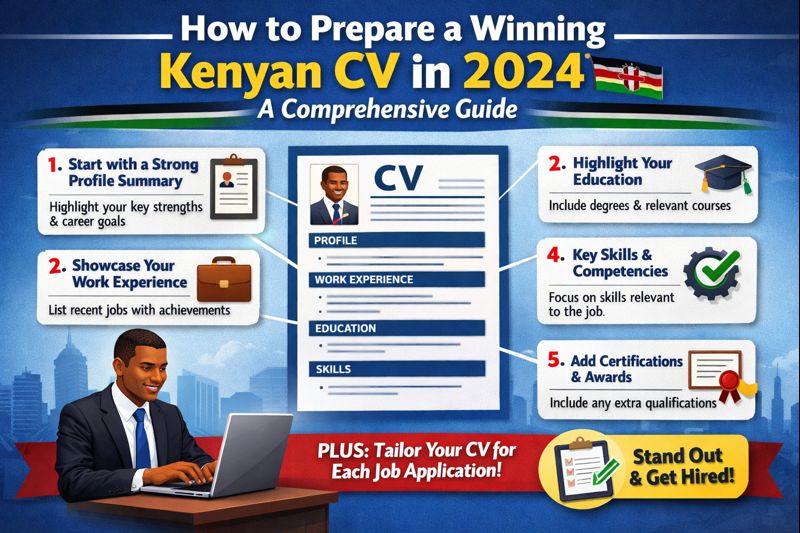
Securing your dream job in Kenya's competitive 2026 market requires more than just qualifications—it demands a strategic, polished CV that stands out immediately. Whether you're a fresh graduate entering Nairobi's bustling corporate scene or an experienced professional seeking advancement, this guide will help you craft a Kenyan CV that gets noticed and gets interviews.
Understanding the Kenyan Job Market Context
Kenya's employment landscape in 2026 continues to evolve with digital transformation, increased remote work opportunities, and growing sectors like technology, finance, healthcare, and green energy. Employers now receive hundreds of applications per position, spending an average of 6-8 seconds on initial CV screening. Your document must immediately communicate your value.
Essential Components of a Winning Kenyan CV
1. Contact Information (Header)
Full name (as appearing on official documents)
Professional title (e.g., "Certified Public Accountant" or "Senior Software Developer")
Phone number (include WhatsApp if you use it professionally)
Professional email address (firstname.lastname@domain.com)
LinkedIn profile URL (optimized and current)
Location (City, County - e.g., "Nairobi, Kenya")
Optional: Portfolio link for creative/technical fields
2. Professional Profile/Summary
Replace the outdated "Objective" with a powerful 3-4 sentence summary highlighting:
Years of experience in your field
2-3 key achievements or areas of expertise
Career focus or specialization
Value proposition to employers
Example: "Results-driven Digital Marketing Specialist with 5+ years experience increasing online visibility and conversion rates for Nairobi-based B2C companies. Expert in SEO strategy, social media campaigns, and analytics. Increased lead generation by 40% for current employer through targeted content marketing strategies."
3. Work Experience (Reverse Chronological Order)
For each position include:
Job title, company name, location, dates of employment
4-6 bullet points starting with action verbs (Managed, Developed, Increased, Implemented)
Quantifiable achievements using numbers, percentages, and timeframes
Relevance to the position you're applying for
Kenyan-specific tip: Include experience with local regulations, markets, or contexts when relevant (e.g., "Knowledge of Kenyan tax legislation" or "Experience with M-Pesa integration").
4. Education
Institution name, qualification earned, location, graduation year
Include relevant coursework, projects, or honors for recent graduates
Professional certifications (CPA(K), CISCO, PMP, etc.) are highly valued
Ongoing professional development shows commitment
5. Skills Section
Hard Skills:
Technical abilities specific to your field
Software proficiencies (include common Kenyan platforms like SAP, QuickBooks, or local systems)
Language skills (specify proficiency: fluent, proficient, conversational)
Soft Skills:
Adaptability, leadership, communication
Cross-cultural competence (valuable in Kenya's diverse workplace)
6. Additional Sections (When Relevant)
Professional memberships (Institute of Human Resource Management Kenya, Architectural Association of Kenya, etc.)
Publications, presentations, or awards
Volunteer experience (highly regarded by many Kenyan employers)
References statement: "References available upon request" (no need to include actual references initially)
Formatting & Design for 2026
Length:
Entry-level: 1 page
Mid-career: 1-2 pages
Senior executive: 2-3 pages maximum
Visual Presentation:
Clean, professional fonts (Arial, Calibri, Times New Roman)
11-12 point font size
Consistent formatting and heading hierarchy
Ample white space for readability
Subtle use of color (optional in creative fields)
Single column layout for ATS compatibility
PDF format for email submissions unless otherwise specified
Kenyan-Specific Formatting Notes:
Use Kenyan date format (e.g., January 2024)
Include Kenyan professional certifications prominently
Consider including KCSE grade if recently graduated and strong
Mention familiarity with local business environments when relevant
Tailoring Your CV for Different Kenyan Industries
Corporate/Finance (Nairobi CBD):
Emphasize regulatory knowledge, risk management
Include specific systems experience (SAP, Oracle)
Highlight quantifiable financial improvements
Tech (Silicon Savannah):
Focus on specific programming languages, frameworks
Include GitHub profile, portfolio links
Emphasize problem-solving with technology
NGO/Development Sector:
Highlight project management, donor reporting
Include specific donor experience (USAID, UN, etc.)
Emphasize community engagement, monitoring & evaluation
Hospitality & Tourism:
Focus on customer service metrics, language skills
Include familiarity with reservation systems
Highlight cross-cultural experience
Keywords & ATS Optimization
Most medium-to-large Kenyan companies now use Applicant Tracking Systems (ATS). To pass this digital gatekeeper:
Incorporate keywords from the job description naturally
Use standard section headings (Work Experience, Education, Skills)
Avoid tables, columns, and graphics that might confuse the system
Include both acronyms and full terms (CPA and Certified Public Accountant)
Save as ATS-friendly format (usually .docx or .pdf)
Common CV Mistakes to Avoid in Kenya
Typos and grammatical errors (instant rejection for many employers)
Including personal information (ID number, marital status, religion, photo unless requested)
Using vague, generic statements without evidence
Listing duties instead of achievements
Unexplained employment gaps (briefly address if significant)
Unprofessional email address (e.g., partyboy@gmail.com)
Inconsistent formatting across pages
Exaggerating or falsifying qualifications (background checks are common)
The Digital Presence Complement
Your CV no longer exists in isolation. Kenyan recruiters regularly check:
LinkedIn Profile: Ensure it matches and expands on your CV
Professional Social Media: Clean up public-facing profiles
Portfolio Website: Essential for creatives, developers, writers
Professional Associations: Active membership adds credibility
Submission Protocol in Kenya
Follow instructions precisely regarding format and submission method
Customize cover letter for each application (still expected in Kenya)
Email subject line should include position and your name
Send during business hours (Monday-Thursday morning is optimal)
Follow up appropriately if no response after 10-14 working days
Special Considerations
For Recent Graduates:
Emphasize coursework, projects, internships
Include leadership in university organizations
Highlight transferable skills from any work experience
For Career Changers:
Focus on transferable skills
Explain your transition in your profile
Highlight relevant training or certifications
For Returning to Workforce:
Address the gap briefly and positively
Highlight volunteer work, freelance projects, or continuing education
Emphasize updated skills
Final Checklist Before Sending
Targeted for specific position and company
Error-free (spelling, grammar, consistency)
Achievement-focused language with quantifiable results
Clean, professional formatting
Correct contact information
Relevant keywords incorporated
Length appropriate for experience level
Saved in correct format (usually PDF)
Complementary cover letter prepared
Digital profiles updated and consistent
The Evolution Continues
The Kenyan CV continues to evolve. Watch for emerging trends like:
Visual/infographic CVs in creative industries
Video introductions supplementing applications
Skills-based formatting gaining popularity
Digital badges for verified credentials
Remember, your CV is your personal marketing document in a competitive marketplace. In Kenya's 2026 job market, the winners are those who present not just their history, but their potential value to an organization. Craft your document with care, tailor it with precision, and present yourself as the solution to an employer's needs.
Your winning Kenyan CV opens doors. The interview is where you walk through them. Prepare accordingly, and that dream job in Nairobi, Mombasa, Kisumu, or beyond could be closer than you think.