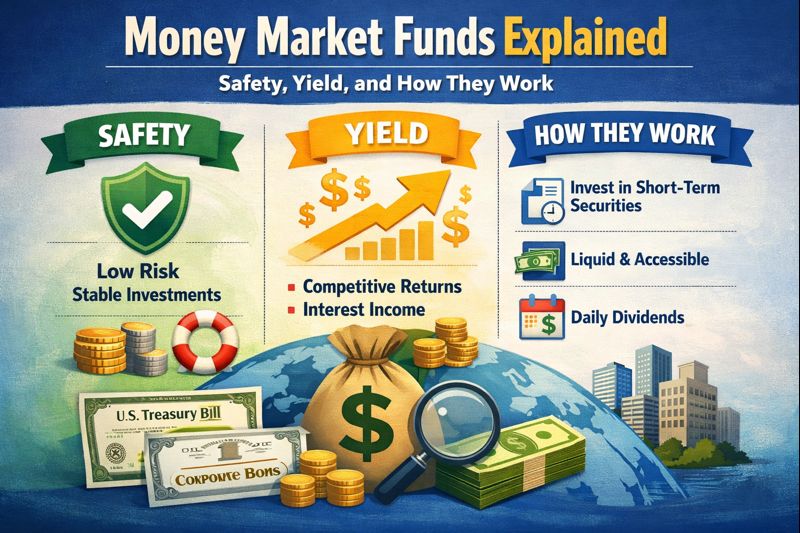
For many Kenyan investors, the challenge is finding an investment option that balances safety, liquidity, and steady returns. While bank savings accounts offer safety, they often provide low interest that struggles to keep up with inflation. This is where money market funds step in. One of the most established options in this category is the Sanlam Money Market Fund, managed by Sanlam Investments East Africa.
The Sanlam Money Market Fund is designed for investors who want to earn competitive short-term returns while keeping their capital accessible. This article provides a detailed, SEO-optimized, 1,500-word guide covering how the fund works, what it invests in, expected returns, fees, risks, and who should consider investing in it.
What Is the Sanlam Money Market Fund?
The Sanlam Money Market Fund is a collective investment scheme that pools money from multiple investors and invests it in short-term, low-risk financial instruments. These instruments are selected to preserve capital while generating regular income.
Unlike long-term investments such as equities or real estate, a money market fund focuses on stability rather than growth. Investors earn interest that accrues daily and is usually credited monthly, making it ideal for short-term financial goals and cash management.
Who Manages the Fund?
Sanlam Investments East Africa is part of the wider Sanlam Group, a long-standing financial services group with a strong footprint across Africa. The East African arm provides professional asset management services, including money market funds, balanced funds, and other investment solutions tailored for both retail and institutional investors.
Professional fund management ensures that:
-
Investments are diversified across approved instruments
-
Credit risk is actively monitored
-
Liquidity is maintained to meet withdrawals
Investment Objective
The primary objectives of the Sanlam Money Market Fund are:
-
Capital preservation – protecting investors’ principal
-
Liquidity – allowing investors to access funds with minimal delay
-
Consistent income – generating regular interest income
Because of these goals, the fund is considered low risk compared to other investment products.
What Does the Sanlam Money Market Fund Invest In?
The fund invests in short-term interest-bearing instruments commonly used in money market strategies. These include:
-
Treasury Bills (T-Bills): Short-term government securities issued by the Central Bank of Kenya
-
Fixed and call deposits: Placed with reputable and regulated banks
-
Commercial paper: Short-term debt issued by highly rated institutions
-
Cash and near-cash instruments: To ensure liquidity
These investments are carefully selected to ensure a balance between return and safety, while maintaining the flexibility to meet withdrawal requests.
Minimum Investment and Accessibility
One of the key strengths of the Sanlam Money Market Fund is its accessibility. It is structured to accommodate:
-
Individual retail investors
-
Small and medium-sized businesses
-
Institutions and corporate treasuries
The minimum investment amount is relatively low compared to many traditional investment products, making it suitable even for first-time investors.
Top-ups are flexible, allowing investors to add funds whenever they have surplus cash.
Returns and Performance Expectations
Money market funds do not promise fixed returns. Instead, returns depend on prevailing interest rate conditions in the economy.
In Kenya:
-
When interest rates rise, money market fund yields generally increase
-
When interest rates fall, yields decline
The Sanlam Money Market Fund aims to deliver competitive returns relative to bank savings accounts while maintaining stability. Returns are typically expressed as an annualized yield, although interest accrues daily.
Investors should view this fund as a cash management tool, not a high-growth investment.
How Interest Is Earned and Paid
Interest in the Sanlam Money Market Fund:
-
Accrues daily
-
Is reflected in the fund’s net asset value (NAV)
-
Is usually credited monthly
This makes it attractive for investors who want predictable income without locking their funds for long periods.
Fees and Charges
Like all professionally managed funds, the Sanlam Money Market Fund charges a management fee. This fee covers:
-
Portfolio management
-
Research and risk management
-
Administration and reporting
The fee is typically deducted from the fund’s assets and is already reflected in the published returns. There are usually no upfront entry fees, which enhances transparency for investors.
Always review the latest fund documentation to understand the current fee structure.
Liquidity and Withdrawals
Liquidity is a defining feature of money market funds. Investors in the Sanlam Money Market Fund can:
-
Request withdrawals with short notice
-
Access funds faster than fixed deposits
-
Avoid penalties associated with early withdrawals from time deposits
However, processing times may depend on:
-
Cut-off times
-
Banking hours
-
Verification requirements
This makes the fund suitable for emergency savings and short-term needs.
Risks to Consider
Although the Sanlam Money Market Fund is low risk, it is not risk-free. Key risks include:
1. Interest Rate Risk
Returns fluctuate with changes in market interest rates.
2. Credit Risk
If an institution issuing a debt instrument faces financial difficulty, it could affect returns. This risk is reduced through diversification and strict credit assessment.
3. Inflation Risk
If inflation rises faster than the fund’s yield, real returns may be reduced.
4. Liquidity Risk
In extreme market conditions, access to funds could be temporarily delayed.
Understanding these risks helps investors make informed decisions.
Who Should Invest in the Sanlam Money Market Fund?
This fund is ideal for:
-
Conservative investors who prioritize capital safety
-
Salaried individuals building an emergency fund
-
Business owners managing short-term cash flow
-
Investors saving for short-term goals (3–12 months)
-
Retirees seeking low-volatility income
It may not be suitable for investors seeking long-term capital growth.
Comparing Sanlam Money Market Fund to Bank Savings Accounts
| Feature | Sanlam Money Market Fund | Bank Savings Account |
|---|---|---|
| Returns | Generally higher | Usually lower |
| Liquidity | High | High |
| Risk | Low (not guaranteed) | Very low |
| Management | Professionally managed | Bank-managed |
| Inflation protection | Better potential | Often poor |
For many investors, an MMF provides a more efficient way to hold idle cash.
How to Start Investing
Investing in the Sanlam Money Market Fund typically involves:
-
Completing an application form
-
Providing identification documents
-
Funding your investment via bank transfer or approved channels
-
Receiving confirmation and regular statements
Once invested, you can monitor performance through statements or online platforms provided by the fund manager.
Tax Considerations
Returns earned from money market funds may be subject to applicable taxes under Kenyan law. Tax treatment can vary depending on whether the investor is an individual or a corporate entity. Consulting a tax professional is recommended for clarity.
Advantages of the Sanlam Money Market Fund
-
Low-risk investment structure
-
High liquidity
-
Professional management
-
Competitive short-term returns
-
Suitable for both individuals and institutions
Limitations to Keep in Mind
-
Returns are not guaranteed
-
Not ideal for long-term wealth creation
-
Sensitive to interest rate movements
Final Thoughts
The Sanlam Money Market Fund stands out as a reliable solution for Kenyan investors seeking stability, liquidity, and consistent income. Managed by Sanlam Investments East Africa, the fund offers professional oversight, diversified investments, and ease of access, making it suitable for both beginners and experienced investors.
If your goal is to protect capital, earn better returns than a savings account, and maintain easy access to your money, this fund is worth serious consideration. As with any investment, reviewing the latest fund documents and aligning the product with your financial goals is essential before committing funds.