Introduction: The Rising Threat to Kenyan Investors
In recent years, Kenya has witnessed an alarming surge in investment scams, leaving thousands of hopeful investors devastated. From pyramid schemes disguised as revolutionary tech startups to "guaranteed return" agriculture projects that vanish overnight, financial fraud has become sophisticated, convincing, and widespread. The Capital Markets Authority (CMA) regularly issues warnings about unlicensed entities, yet new scams emerge constantly, exploiting Kenyans' legitimate desire for financial growth.
This comprehensive guide will equip you with the knowledge, tools, and strategies to identify, avoid, and report investment scams in Kenya. Whether you're a seasoned investor or just starting your wealth-building journey, this information could protect your hard-earned money from predatory schemes.
Understanding the Kenyan Investment Scam Landscape
Common Types of Investment Scams in Kenya
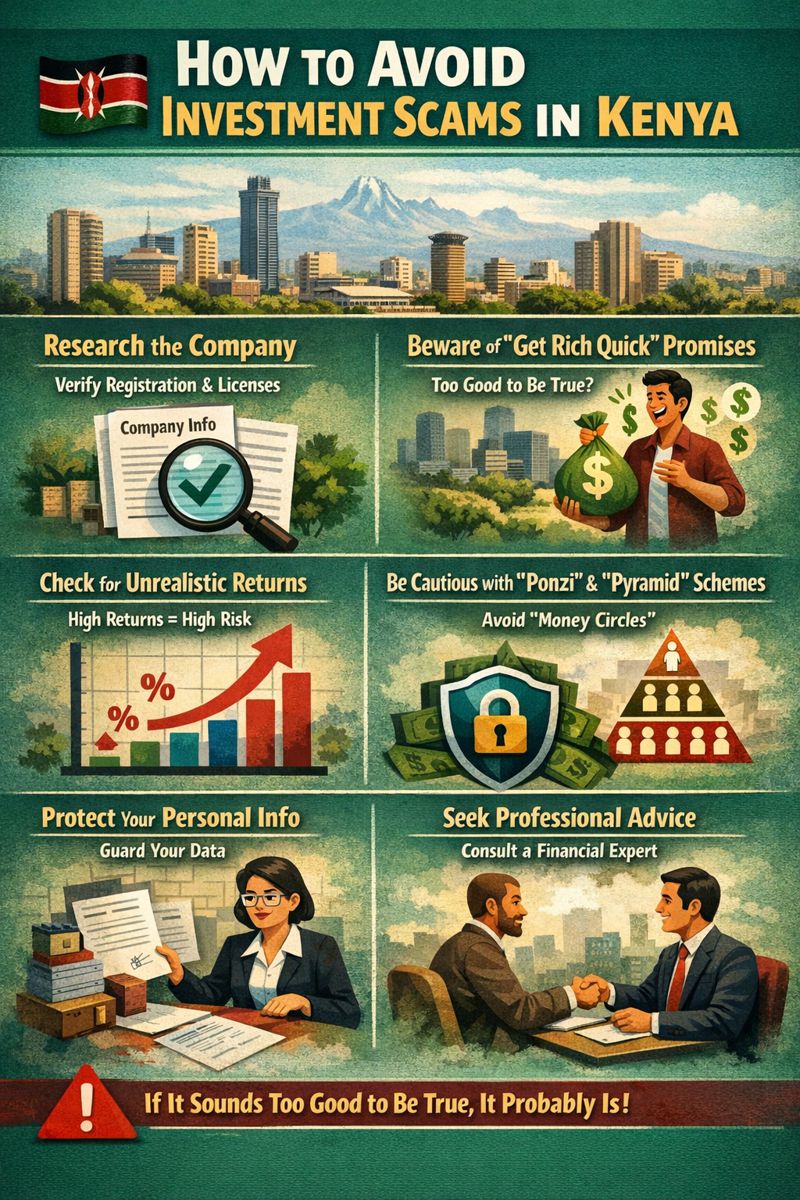
Pyramid and Ponzi Schemes
The classic "get rich quick" structure where returns are paid from new investors' money rather than profit
Examples: Recent schemes promising 30-50% monthly returns on small investments
Red Flag: Emphasis on recruiting others rather than product value
Unlicensed Forex and Binary Options Trading
Unregulated platforms promising unrealistic profits from currency trading
Often use local agents and social media influencers for credibility
Red Flag: Guarantees of consistent high returns in volatile markets
Fake Agri-Business Investments
Promises of extraordinary returns from "revolutionary" farming projects
May involve quick-growing trees, miracle livestock, or exclusive crop varieties
Red Flag: Pressure to invest quickly before "the opportunity disappears"
Clone Investment Firms
Scammers impersonate legitimate, licensed companies
Use similar names, websites, and documentation to genuine firms
Red Flag: Slight variations in website URLs or company registration details
Cryptocurrency and Digital Asset Scams
Fake initial coin offerings (ICOs) and non-existent crypto exchanges
Promises of "too good to be true" returns on Bitcoin and altcoin investments
Red Flag: Pressure to invest in unfamiliar digital assets
Psychological Tactics Scammers Use
Understanding the psychological manipulation is key to resistance:
Social Proof: Testimonials from "satisfied investors" (often actors or accomplices)
Authority Bias: Use of official-sounding terminology and fake credentials
Scarcity Mentality: "Limited slots available" to create urgency
Reciprocity: Small initial returns to build trust before the big ask
Familiarity Exploitation: Use of local references, churches, or community groups
7-Step Verification Process for Any Kenyan Investment Opportunity
Step 1: Regulatory Compliance Check
Always verify with Kenyan authorities:
Capital Markets Authority (CMA) Registration
Visit www.cma.or.ke and use their "Check Licensed Intermediaries" tool
Legitimate investment companies must have CMA approval
Be wary of firms claiming "international registration only"
Central Bank of Kenya (CBK) Authorization
For forex trading, money market, or banking-like services
Check the CBK's list of authorized institutions
Retirement Benefits Authority (RBA)
For pension-related investment products
Insurance Regulatory Authority (IRA)
For investment products bundled with insurance
Actionable Tip: Take a screenshot of the regulatory approval and verify the license number directly on the regulator's website, not through links provided by the company.
Step 2: Company Background Investigation
Due diligence is non-negotiable:
Physical Address Verification
Visit the registered office address personally
Be suspicious of P.O. Box-only addresses or virtual offices in premium locations
Business Registration Check
Verify with the Registrar of Companies at www.ecitizen.go.ke
Check company directors' history for other failed ventures
Operational History
How long has the company operated in Kenya?
Be extra cautious with companies less than 3 years old offering exceptional returns
Audited Financial Statements
Legitimate investment firms should provide audited accounts
Lack of transparency about financial health is a major red flag
Step 3: Investment Product Analysis
Question the fundamentals of the offer:
Return Promises
Any guaranteed return above 15% annually requires extreme scrutiny
Compare with Kenyan government bonds (typically 10-13%) as a benchmark
Risk Disclosure
Legitimate investments clearly explain risks
Be wary of "risk-free" or "guaranteed" terminology
Revenue Model Clarity
How exactly does the company generate profits?
Vague explanations like "trading algorithms" or "international arbitrage" without specifics are suspicious
Exit Strategy
How and when can you withdraw your money?
Complex withdrawal procedures are a common scam characteristic
Step 4: Personnel Credential Verification
Check the people behind the company:
Professional Qualifications
Ask for proof of investment advisory certifications
Verify with relevant professional bodies in Kenya
Employment History
Research company directors on LinkedIn
Unexplained gaps or frequent company changes may indicate problems
Regulatory Disciplinary History
Check if any personnel have been disciplined by CMA, CBK, or other regulators
Step 5: Online Presence and Digital Footprint Analysis
Digital clues often reveal scams:
Website Analysis
Check domain age using tools like Who.is (new domains are riskier)
Look for poor grammar, stock photos presented as real, and lack of specific details
Social Media Scrutiny
Genuine companies have organic engagement, not just paid promotions
Check for real, verifiable testimonials versus obvious fake accounts
Search for Negative Reviews
Search "[Company Name] + scam" or "[Company Name] + complaints"
Check Kenyan forums like PigaDeck and consumer protection sites
Contact Information Verification
Call the listed numbers at different times
Be suspicious if only mobile numbers are provided
Step 6: Investment Documentation Review
Never sign without understanding:
Proper Contract Review
Have a trusted lawyer review all documents
Ensure all verbal promises are included in writing
Fee Structure Clarity
All charges should be explicitly stated
Watch for hidden fees or early withdrawal penalties
Regulatory Language
Legitimate investments include risk disclaimers as required by Kenyan law
Missing standard legal language is a warning sign
Step 7: Trust Your Instincts and Seek Independent Advice
When in doubt, pause and consult:
Independent Financial Advisor Consultation
Pay for unbiased advice before investing significant amounts
Ensure they have no affiliation with the investment company
Community Verification
Ask in trusted investment groups (like authorized investment clubs)
Consult with the Consumer Federation of Kenya (COFEK)
The "Too Good to Be True" Test
If returns sound unrealistic compared to market rates, they probably are
Remember: Greed clouds judgment—scammers know this
Red Flags That Should Trigger Immediate Caution
High-Priority Warning Signs:
Pressure Tactics: "Invest now or miss out" creates artificial urgency
Complex Explanations: Using jargon to confuse rather than clarify
Unregistered Entities: Operating without CMA or relevant authority approval
Recruitment Focus: Earnings tied more to recruiting others than the investment itself
Inconsistent Stories: Changing explanations about how profits are generated
Bank Account Issues: Asking for deposits to personal accounts rather than company accounts
Lack of Paper Trail: Avoiding official receipts or proper documentation
Medium-Priority Warning Signs:
Too New: Company operating for less than 2 years with exceptional return promises
Offshore Registration Only: No local regulatory compliance despite operating in Kenya
Celebrity Endorsements: Heavy use of paid influencers without investment expertise
Exclusive Language: "Secret system" or "privileged information" not available to public
What to Do If You Suspect an Investment Scam
Immediate Actions:
Stop All Transactions
Halt any pending deposits or transfers
Contact your bank immediately if you've sent money
Document Everything
Save all communication, contracts, and transaction records
Take screenshots of websites and social media promises
Report to Authorities
CMA: Report through their website or hotline (020 2264000)
Central Bank of Kenya: For forex or banking-related scams
Directorate of Criminal Investigations (DCI): For clear fraud cases
Consumer Federation of Kenya (COFEK): For consumer protection support
Warn Others
Share your experience on legitimate consumer protection platforms
Report fake social media accounts and pages
If You've Already Lost Money:
Legal Action
Consult with a lawyer specializing in financial fraud
Consider joining a class action if many are affected
Tax Implications
Report the loss to KRA as it may have tax implications
Keep records for potential recovery or legal proceedings
Psychological Support
Investment scam victims often experience significant distress
Seek support from friends, family, or professional counselors
Building Long-Term Investment Safety Habits
Ongoing Vigilance Practices:
Continuous Education
Follow CMA investor education programs
Attend certified financial literacy workshops
Portfolio Diversification
Never put all funds in one investment, no matter how promising
Spread investments across different asset classes and regulated entities
Regular Portfolio Review
Quarterly check-ins on all investments
Verify that all companies maintain their regulatory status
Stay Updated on Scam Trends
Subscribe to CMA investor alerts
Follow reputable Kenyan financial news sources
Recommended Legitimate Investment Channels in Kenya:
Nairobi Securities Exchange (NSE) through licensed brokers
CMA-regulated Collective Investment Schemes
Licensed Real Estate Investment Trusts (REITs)
Authorized mobile investment platforms (like Eazzy Invest by Equity Bank)
Government securities through Central Bank or authorized agents
Conclusion: Empowerment Through Diligence
In Kenya's dynamic investment landscape, opportunities abound alongside risks. The difference between wealth-building and financial devastation often comes down to disciplined verification and healthy skepticism. By implementing the 7-step verification process, recognizing red flags, and developing ongoing vigilance habits, Kenyan investors can confidently navigate the market while avoiding predatory schemes.
Remember: No legitimate investment will rush you, evade questions about regulation, or promise returns that defy market logic. Your greatest protection is your own informed judgment, bolstered by thorough due diligence and consultation with independent, licensed professionals.
Take Action Today: Bookmark the CMA website, save their verification tools, and make regulatory checking your non-negotiable first step for every investment opportunity. Your financial security is worth the extra time and effort.
Disclaimer: This article provides general guidance on avoiding investment scams in Kenya. It does not constitute personalized financial advice. Always consult with licensed financial advisors before making investment decisions. Investment values can go down as well as up, and past performance is not indicative of future results.